Gaze Stabilization Exercises: How They Work, Start Safely
- Gaze stabilization works on the vestibulo-ocular reflex (VOR), the link between the inner ear and the eye muscles that keeps vision clear when you move.
- ‘x1’ means the target stays still while the head moves; progressions add standing, busier backgrounds or other variations, chosen by a therapist.
- The Cochrane review we read found moderate to strong evidence that vestibular rehabilitation is a safe and effective management option for unilateral peripheral vestibular dysfunction, without singling out one exercise type.
- They are not the first step for BPPV, which is usually treated with a repositioning maneuver, and they are not suitable for every cause of dizziness.
- This page gives no dosage, speed or progression schedule. That is the therapist’s job, based on your assessment.
What gaze stabilization means
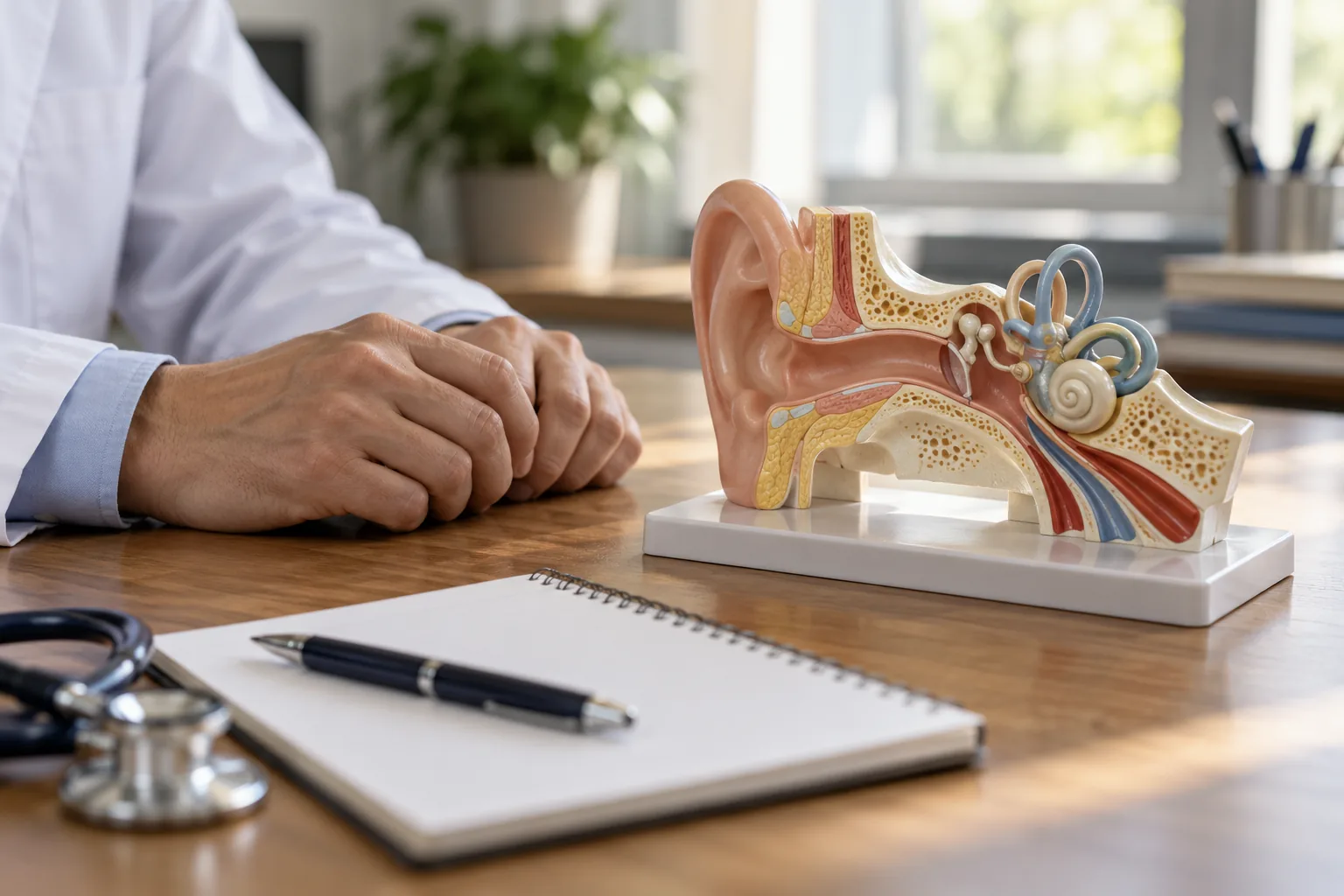
Your eyes and your inner ears are wired together. When you turn your head, the vestibular system tells the eye muscles to move the eyes the opposite way, so the world does not blur. This is the vestibulo-ocular reflex, or VOR. After some inner-ear problems, such as vestibular neuritis, the reflex can become less accurate on one side. People then notice blurred or bouncing vision when they move the head, and dizziness in busy surroundings.
Gaze stabilization exercises ask you to keep your eyes fixed on a target while you deliberately move your head. According to patient information from the UK Brain & Spine Foundation, as summarised in search results (the page blocked our automated fetch, so treat this description as unverified), the aim is to improve control of eye movements so that vision stays clear during head movement. Repeated practice is thought to help the brain recalibrate over time. A therapist decides whether this approach fits your case and how to grade it.
Who gaze stabilization exercises are for
In general terms they are used in vestibular rehabilitation for people whose balance system has been damaged or is working unevenly, such as after vestibular neuritis or labyrinthitis. The NHS says vestibular rehabilitation exercises should be done under the supervision of a specialist such as a physiotherapist or audiologist and mentions them mainly for balance problems that last for many months or years. The NIDCD says a vestibular rehabilitation therapist can develop an individualized treatment plan.
| Situation | Are gaze exercises a likely fit? | Usual first step |
|---|---|---|
| BPPV (brief spinning spells with head position) | Not usually the first tool | A repositioning maneuver by a trained clinician; see the Epley maneuver and exercises for BPPV |
| Lingering imbalance after vestibular neuritis or labyrinthitis | Often discussed as part of rehabilitation | Assessment by a vestibular therapist; see vestibular neuritis exercises |
| Chronic dizziness with visual sensitivity (e.g. PPPD) | May be part of a graded program | Assessment; see PPPD guide |
| Ménière’s disease or vestibular migraine | Depends on the stage and specialist advice | Medical management first |
| Sudden new dizziness with neurological signs | No | Emergency care |
If you are unsure which row you are in, ask for an assessment before you try any head-movement exercise.
How these exercises work in practice, in general terms
We deliberately do not publish a step-by-step protocol, because the right set-up, speed and duration depend on your diagnosis, which side is affected, other health problems and fall risk. What we can say is how therapists usually think about the exercise family:
- A fixed target, a moving head. The simplest version has you look at a stationary target while turning the head, and the key rule is that the target should stay clear and not blur.
- Some dizziness is expected, within limits. The exercise works partly by provoking mild symptoms; a therapist tells you how much is acceptable and when to slow down or stop. Do not guess this limit yourself.
- Gradual progression. Therapists make the task harder in small steps, for example by changing posture, background or head movement. Which steps and in what order is individual.
- Regular, short practice. Frequency and duration are set by the therapist. The guideline for peripheral vestibular hypofunction (APTA, 2022) addresses dosage; we have not read the full text and do not quote numbers.
The Cochrane review we read reports no adverse effects from any form of vestibular rehabilitation and says there is insufficient evidence to decide whether one form is better than another. That is reassuring, but it does not mean unsupervised exercises are risk-free, particularly for people at risk of falls.
Common mistakes to avoid
- Starting without a diagnosis. The same dizziness can come from BPPV, a vestibular disorder, migraine, blood pressure, medicines or a neurological problem. See common causes of vertigo.
- Copying an online video. Videos cannot see which ear is affected or how you react. See before you follow a vertigo exercise video.
- Pushing through severe or worsening symptoms. If an exercise sharply worsens your symptoms, stop and tell your therapist or doctor.
- Doing them where you could fall. Use a stable seat or have someone nearby, and clear the area. The CDC reports that more than one in four people aged 65 and older fall each year, so fall risk is a real consideration. See balance programs for seniors.
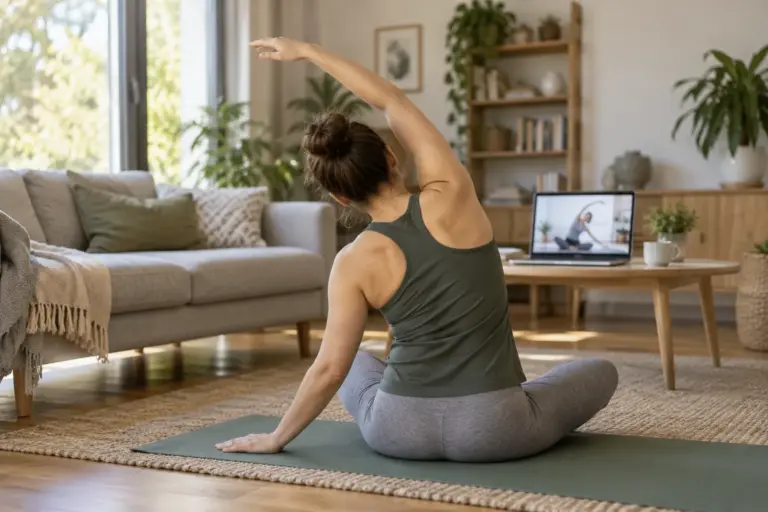
- Treating general exercise as a substitute. Relaxation, yoga or neck routines can be pleasant but are not the same as targeted gaze work. For example, the home program we reviewed has no gaze stabilization or balance exercises; see program vs vestibular rehabilitation and our review of that routine.
- Changing medicines on your own. Never stop or change a prescribed medicine because of an exercise program.
Gaze work versus general neck and relaxation routines
It helps to separate three different ideas that often get mixed in marketing: repositioning maneuvers (for BPPV crystals), gaze and balance training (for vestibular hypofunction and similar problems), and general relaxation or mobility routines. They have different purposes, and a program that offers only one of them cannot substitute for the others. If your clinician recommends gaze work, follow their plan; if you also enjoy a relaxation routine, tell them, so they can fit it in safely.
Questions to ask your clinician
- Is my dizziness a vestibular problem, and which side or system is affected?
- Would gaze stabilization or other vestibular rehabilitation help my case, and when should I start?
- Can you refer me to a vestibular physical therapist?
- How much dizziness is acceptable during exercise, and when should I stop?
- Is it safe to do the exercises alone, or should someone be present?
- How will we know if the exercises are working, and when will you review me?
FAQ
What are gaze stabilization exercises?
Exercises in which you keep your eyes on a target while moving your head, used in vestibular rehabilitation to train the reflex that keeps vision steady during movement.
What does VOR x1 mean?
The vestibulo-ocular reflex (VOR) links the inner ear to eye movements. ‘x1’ usually refers to keeping the target still while the head moves; your therapist chooses any other variations.
Are gaze stabilization exercises safe to do at home?
Only after assessment and with a therapist’s instructions. They may provoke dizziness, and falls are a risk for some people. Do not copy a video without a diagnosis.
How long do they take to work?
We found no single reliable timeframe for all conditions. The NHS says most people with labyrinthitis regain balance within about 2 to 6 weeks, though recovery can take longer, and rehabilitation is mainly discussed for problems that last months or years.
Do they help BPPV?
BPPV is usually treated with a repositioning maneuver by a clinician. Gaze exercises are not usually the first step.
Is there a printable sheet?
We do not publish one, because a generic sheet cannot be safe for every cause. A vestibular physical therapist can give you a sheet matched to your assessment.
Sources
- Brain & Spine Foundation (UK), Vestibular rehabilitation exercises: www.brainandspine.org.uk/health-information/fact-sheets/vestibular-rehabilitation-exercises (accessed 20 Oct 2026)
- Hall CD et al., Vestibular Rehabilitation for Peripheral Vestibular Hypofunction: Updated Clinical Practice Guideline (APTA), J Neurol Phys Ther 2022: doi.org/10.1097/NPT.0000000000000382 (accessed 20 Oct 2026)
- Cochrane, Vestibular rehabilitation for unilateral peripheral vestibular dysfunction (CD005397): www.cochrane.org/CD005397/ENT_vestibular-rehabilitation-people-who-have-had-problem-balance-organs-inner-ear (accessed 20 Oct 2026)
- NHS, Labyrinthitis: www.nhs.uk/conditions/labyrinthitis (accessed 20 Oct 2026)
- NIDCD (NIH), Balance disorders: www.nidcd.nih.gov/health/balance-disorders (accessed 20 Oct 2026)
- NHS, Vertigo: www.nhs.uk/conditions/vertigo (accessed 20 Oct 2026)
- NHS, Stroke: symptoms: www.nhs.uk/conditions/stroke/symptoms (accessed 20 Oct 2026)
- CDC, STEADI initiative: www.cdc.gov/steadi/about/index.html (accessed 20 Oct 2026)