
Vestibular Neuritis vs Labyrinthitis: How to Tell the Difference
Disclosure: this page contains affiliate links (ClickBank). If you buy through them we may earn a commission at no extra cost to you. Educational content only, not medical advice.
Vestibular neuritis and labyrinthitis get lumped together constantly, and it’s easy to see why: both start with sudden, severe spinning, both are usually blamed on a virus, and both can leave you unsteady for weeks. But they aren’t quite the same condition, and the distinction matters for what to expect and who should see you.
What vestibular neuritis is
Vestibular neuritis is inflammation of the vestibular nerve, the branch that carries balance information from the inner ear to the brain. It’s widely thought to follow a viral infection, often a mild cold in the days or weeks before, though the exact virus is rarely confirmed. The hallmark is sudden, intense vertigo that peaks over hours, along with nausea and difficulty walking straight, but hearing stays normal. That last point is the key one: neuritis affects balance only, not sound.
What labyrinthitis is
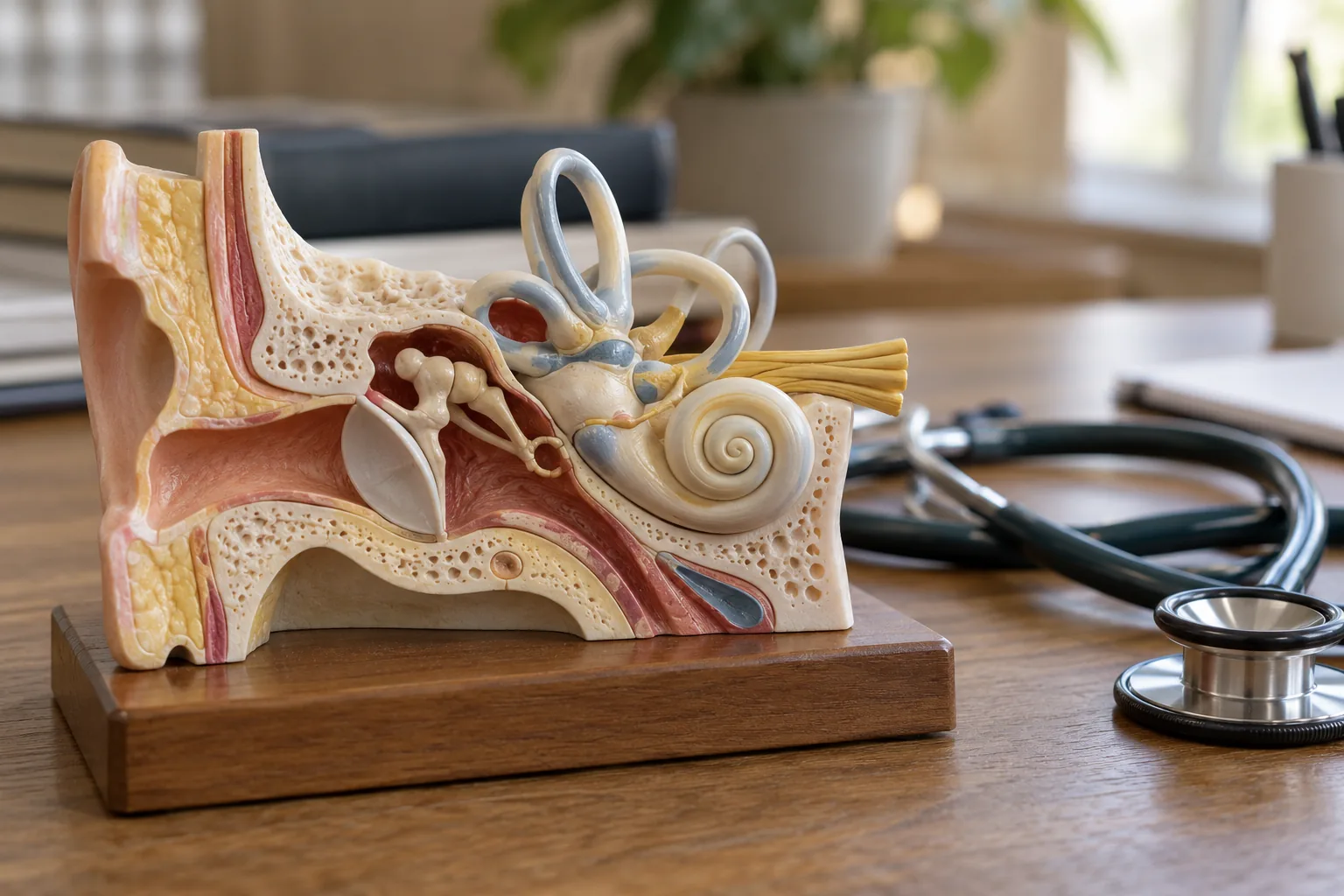
Labyrinthitis is inflammation of the labyrinth itself, the fluid-filled structure in the inner ear that houses both the balance organs and the cochlea, which handles hearing. Because both structures sit close together and share the same fluid, inflammation there tends to affect both at once. So alongside the same sudden, severe vertigo, labyrinthitis usually adds hearing loss, tinnitus (ringing or buzzing), or a feeling of fullness in the affected ear. It can follow a viral illness the same way neuritis does, or occasionally a middle-ear infection that spreads inward.
The one question that tells them apart
If you’re trying to work out which one you might have, ask: has anything changed with your hearing on either side? If the answer is no, and the spinning is otherwise identical, neuritis is the more likely label. If you’ve noticed muffled hearing, ringing, or fullness in one ear alongside the vertigo, labyrinthitis fits better. In practice, doctors confirm this with a hearing test rather than relying on how things feel, since inner-ear symptoms are notoriously hard to self-diagnose accurately.
| Feature | Vestibular neuritis | Labyrinthitis |
|---|---|---|
| Sudden severe vertigo | Yes | Yes |
| Hearing loss or tinnitus | No | Usually yes, at least mildly |
| Structure affected | Vestibular nerve only | Whole labyrinth (balance + hearing) |
| Typical trigger | Viral illness (assumed) | Viral illness, sometimes middle-ear infection |
| Recovery pattern | Gradual compensation over weeks | Similar, plus possible lasting hearing change |
Why the difference actually matters
Beyond the label, the distinction changes two things. First, anyone with new hearing loss alongside vertigo generally needs an ENT assessment sooner rather than later, since some causes of sudden hearing loss are time-sensitive to treat. Second, if hearing is involved, that’s a reason to be more thorough about ruling out other causes before assuming it’s a straightforward viral labyrinthitis, since hearing symptoms can occasionally point toward other conditions that need different management.
Who tends to get either one
Neither condition is rare. Vestibular neuritis is usually described as one of the more common causes of a single, severe episode of vertigo in adults, most often striking people between their 30s and 60s, though it can happen at any age. It tends to arrive out of nowhere, sometimes a week or two after an unrelated cold or flu, which is part of why the viral link is suspected even when no specific virus is ever identified. Labyrinthitis follows a similar age pattern, and the two are close enough in presentation that some clinicians use the terms loosely until a hearing test clarifies which structures are involved.
Practical self-care for the first week
However the diagnosis lands, the first several days tend to look similar for both conditions, and a handful of practical steps make that stretch easier to get through:
- Rest somewhere dim and quiet during the worst of the spinning, and avoid reading or screens if they make nausea worse
- Move your head slowly and deliberately rather than avoiding movement altogether, since gentle motion supports the brain’s compensation process
- Stay hydrated and eat small, plain meals if nausea is significant, rather than skipping food entirely
- Have someone else drive, and avoid climbing ladders or anything with a real fall risk until your balance is clearly improving
- Keep a simple symptom note (what triggers dizziness, how long episodes last) to bring to your follow-up appointment
How both are treated
The acute phase of either condition is usually managed the same way: short-term anti-nausea or anti-vertigo medication to get through the worst days, rest, and gradually returning to normal activity as tolerated. Steroids are sometimes prescribed early on, particularly for neuritis, though the evidence for how much they speed recovery is mixed. Once the sharpest symptoms settle, most people are left with some lingering unsteadiness while the brain compensates for the affected side, and this is where vestibular rehabilitation therapy tends to help the most, retraining balance through targeted gaze and movement exercises rather than waiting for spontaneous recovery.
See a home routine some use alongside recovery →
What recovery typically looks like
The sharpest vertigo tends to ease within days, but a sense of mild unsteadiness, especially with quick head turns or in busy visual environments like supermarkets, can linger for several weeks and occasionally months. This is normal compensation, not a sign that something is wrong, though it’s worth mentioning at a follow-up appointment if it isn’t gradually improving. For labyrinthitis, any hearing change should also be monitored, since some people recover it fully and others are left with a degree of permanent loss.
Whichever you’re recovering from, a program some people use to support that lingering unsteadiness is this home exercise guide — it isn’t a substitute for a diagnosis or for formal vestibular rehab, but as a low-cost daily routine once serious causes are ruled out, it overlaps with parts of what a therapist would prescribe.
Frequently Asked Questions
Can vestibular neuritis turn into labyrinthitis?
They’re generally considered separate conditions rather than one progressing into the other, though both can stem from the same underlying viral trigger affecting slightly different structures.
Does labyrinthitis always cause permanent hearing loss?
No. Many people recover their hearing fully within weeks. Others are left with some permanent change, which is part of why an ENT follow-up matters if hearing was affected.
How long is someone usually off work with either condition?
It varies widely, from a few days for milder cases to a couple of weeks for the acute phase, with lighter duties sometimes needed longer while balance fully settles.
Is it safe to drive during recovery?
Not while the vertigo is active or you feel unsteady. Most people wait until they can walk a straight line confidently and turn their head without triggering spinning before returning to driving.
If you’re not sure your symptoms fit either pattern, our guide on telling dizziness and true vertigo apart is a good starting point before narrowing things down further.